

Application guide
GP Yellow Resin for Door Skin Manufacturing
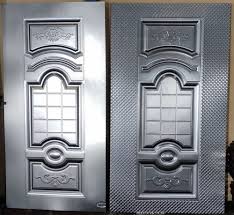
Moulded FRP door skins need a laminating resin that wets out reinforcement cleanly behind a gelcoat-finished face — GP Yellow Resin fills that structural role with the same cure chemistry as GP Clear Resin, in a thicker, slower-gelling grade.
Structural backing behind a gelcoat face.
What manufacturers build
Why this material suits the work
Required resin characteristics
- Reliable wet-out of reinforcement behind a gelcoat or surface layer, or on direct-finish skins where flow into fine detail matters most
- A workable gel time so every skin in a batch releases from the mould on schedule
- Adequate mechanical bond to the reinforcement and to whatever surface layer is used
- Reliable room-temperature cure for predictable production scheduling
- Consistent batch-to-batch quality across repeated mould cycles
Process context
Advantages
- Workable structural laminate behind a gelcoat or surface-finished door skin
- Longer 10–15 minute gel time gives more time to work resin into detailed panel profiles
- Same non-accelerated MEKP/cobalt octoate cure system as GP Clear Resin
- Consistent 99% purity across repeated production cycles
Common products
- Flush-profile FRP door skins
- Raised-panel and wood-grain-textured door skins
- Matched front-and-back skin pairs for door assembly
- Custom-moulded decorative door faces
Common questions
It depends on how the skin is finished. Behind a gelcoat or surface layer, GP Yellow Resin's own colour and viscosity don't affect the finish. For direct-finish skins that rely on the base resin's own flow into fine mould texture without a separate surface layer, GP Clear Resin's lower viscosity flows into fine detail more readily and avoids any yellow tint showing through.
Many producers apply a gelcoat or surface layer first for finish quality and colour, then laminate GP Yellow Resin and reinforcement behind it — the same approach commonly used with GP Clear Resin.
Not for a better finish — GP Clear Resin's lower viscosity and colourless finish make it the better default for direct-finish skins. GP Yellow Resin is a reasonable alternative behind a gelcoat or surface layer, or where its longer 10–15 minute gel time is useful for working resin into a detailed panel profile.
No. Lamination Resin (LR Resin) is formulated specifically for the fast-cycle bonding step that attaches a finished skin to a door core. GP Yellow Resin is a general-purpose resin used for the skin-moulding laminate itself, not that bonding step.
It is cured at room temperature with an MEKP catalyst (around 1.5%) and a cobalt octoate accelerator (0.3–0.5%), with dosage adjusted for the mould turnaround time each production run needs.
Need GP Yellow Resin for your door skin production?
Get a bulk quote for GP Yellow Resin, or talk to our technical team about whether GP Yellow Resin or GP Clear Resin better suits your skin moulding line.
Contact Samrat FRP Traders