

Enquire on WhatsApp

Application guide

Resin for Door Skin Manufacturing

Door skin production calls for excellent wet-out and a clean, glass-like cured finish straight out of the mould.

Clean, high-gloss finish on every skin.

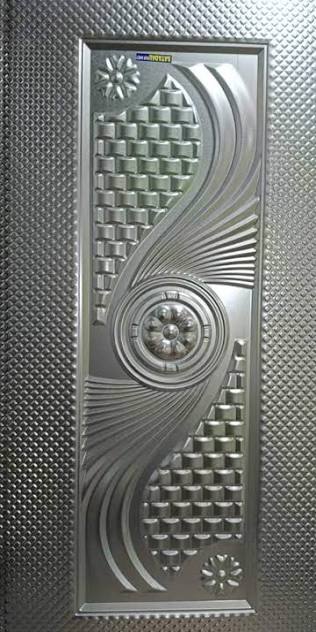
A door skin is the moulded face panel that gives an FRP door its finished look — the raised panel design, wood-grain texture or flush profile that buyers actually see. Unlike a door frame or structural laminate, the skin is a cosmetic and functional surface at once: any dry patch, air bubble or uneven cure shows up immediately as a visible defect once the part comes out of the mould, which puts more weight on wet-out quality and surface finish than on almost any other FRP product.

What manufacturers build

Door skin manufacturers produce moulded FRP panels in a range of profiles — flush, raised-panel, wood-grain-textured and custom designs — that are later bonded to a core material to form a complete door shutter, or sold directly to door assemblers. Skins are typically moulded as matched front-and-back pairs to standard door sizes.

Why this material suits the work

Because the mould surface itself creates the finished look of a door skin, the resin against that surface needs to wet out reinforcement completely and release a clean, glass-like face with no dry spots or air entrapment. GP Clear Resin's clear, low-viscosity liquid form (350–450 cPs) flows into fine mould detail and wets out chopped strand mat thoroughly, supporting the smooth, high-clarity finish door skin moulding demands. Where a producer is running door-skin lamination at high volume as their core business, Samrat FRP Traders' Lamination Resin (LR Resin) is formulated specifically for that bonding step — GP Clear Resin is well suited to the skin-moulding process itself and to general door-skin fabrication.

Required resin characteristics

  • Excellent wet-out to eliminate dry patches on a highly visible moulded face
  • Low viscosity to flow into fine mould detail — wood-grain texture, panel profiles and edges
  • A clean, glass-like cured surface with minimal air entrapment
  • Consistent gel time so every skin in a batch releases from the mould on schedule
  • Reliable room-temperature cure for predictable production scheduling

Process context

Door skins are moulded face-down in a profiled mould: a gelcoat or surface layer is often applied first for finish quality, followed by chopped strand mat wet out with resin catalysed by an MEKP hardener and cobalt octoate accelerator. The laminate is rolled to remove trapped air and ensure even thickness across the panel profile, then cured at room temperature before being released, trimmed to size, and paired for use in door assembly.

Advantages

  • Low viscosity supports a clean, defect-free finish on highly visible moulded panels
  • Fast gel time keeps mould turnaround efficient in high-volume skin production
  • Non-accelerated cure lets fabricators fine-tune dosage for the finish quality each mould run needs
  • Consistent 99% purity reduces surface defects across repeated production cycles

Common products

  • Flush-profile FRP door skins
  • Raised-panel and wood-grain-textured door skins
  • Matched front-and-back skin pairs for door assembly
  • Custom-moulded decorative door faces

Common questions

Why does door skin moulding need a different resin approach than a structural laminate?

The skin's moulded face is the visible, finished surface of the door, so wet-out quality and surface finish matter as much as mechanical strength — any dry patch or trapped air shows up directly on the panel.

Is GP Clear Resin suitable for wood-grain-textured door skins?

Yes. Its low viscosity helps it flow into fine mould texture and detail, supporting a clean release and accurate reproduction of the mould's grain or panel pattern.

Should door skins be gelcoated before laminating with GP Clear Resin?

Many producers apply a gelcoat or surface layer first for finish quality and colour, then laminate GP Clear Resin and reinforcement behind it — this is a common approach for a smooth, defect-free door skin.

How is GP Clear Resin catalysed for door skin production?

It is cured at room temperature with an MEKP catalyst (around 1.5%) and a cobalt octoate accelerator (around 0.4%), with dosage adjusted for the mould turnaround time each production run needs.

What reinforcement is used behind a moulded door skin?

E-glass chopped strand mat is the standard reinforcement, wet out with catalysed resin and rolled to remove air before the panel cures.

Need resin for your door skin production?

Get a bulk quote or talk to our technical team about the right grade and dosage for your skin moulding line.

Contact Samrat FRP Traders