

Application guide
Resin for Wooden Door Lamination
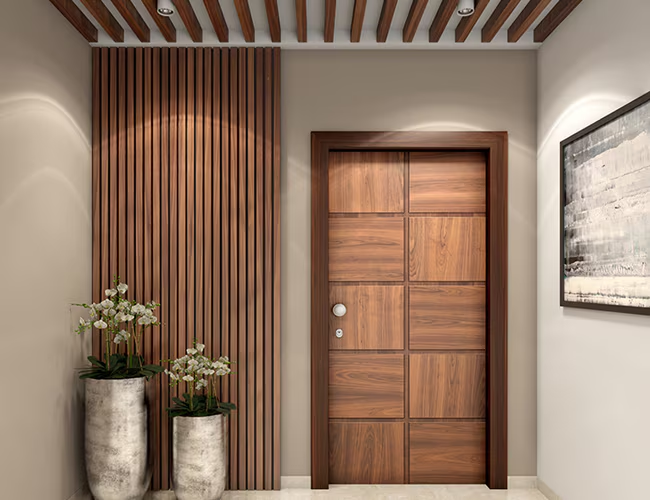
Solid-wood and wood-core doors are commonly faced with a decorative veneer, bonded on with a fast-curing resin to protect and finish the timber surface.
Reliable bond to timber and veneer alike.
What manufacturers build
Why this material suits the work
Required resin characteristics
- Reliable adhesion to timber and wood-core substrates as well as to the veneer sheet
- Fast gel time to keep veneer-facing production moving
- A clear cure that doesn't discolour a natural wood-grain veneer
- Room-temperature or press-assisted cure depending on production scale
- Consistent bond quality across every door in a batch
Process context
Advantages
- Reliable adhesion to both timber substrates and veneer sheets
- 5-minute gel time supports efficient veneer-facing production
- Clear cure preserves the natural appearance of the wood-grain veneer
Common products
- Veneer-faced solid-wood doors
- Wood-core doors with a bonded decorative veneer finish
Common questions
Yes, it bonds reliably to both natural wood veneer and synthetic decorative laminate sheets.
No — it cures clear and transparent, which is why it's suited to work where the natural grain and colour of the veneer need to stay visible.
With an MEKP catalyst (around 1.5%) and a cobalt octoate accelerator (around 0.4%), the same system used across Samrat FRP Traders' general-purpose grades.
The bonding principle is similar, but this page focuses specifically on timber and wood-core doors finished with a natural wood veneer rather than a synthetic laminate sheet.
Yes — its gel time suits either a hot-press production line or clamped room-temperature bonding for smaller-scale work.
Need resin for your wood veneer door lamination?
Get a bulk quote or talk to our technical team about the right dosage for your veneer-facing line.
Contact Samrat FRP Traders