

Application guide
Gelcoat for Automotive & Transport Body Panels
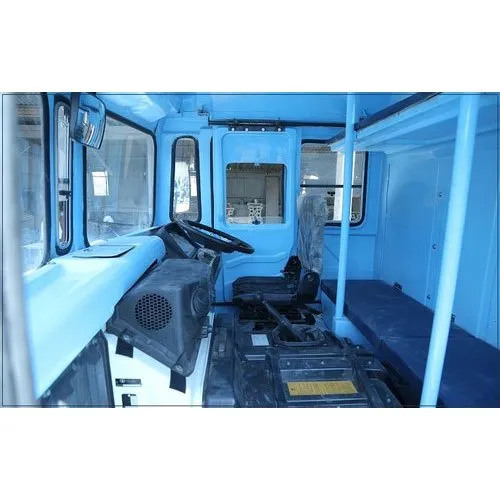
FRP body panels for buses, autorickshaws and trucks need a smooth, glossy cosmetic surface coat applied to the mould face — separate from the structural laminate built up behind it.
Glossy, paint-ready panel surface.
What manufacturers build
Why this material suits the work
Required resin characteristics
- Thixotropic body suited to flat and gently curved panel moulds
- High gloss, smooth cured finish ready for the vehicle body without further finishing
- Pigmentable to match fleet or livery colours
- Room-temperature MEKP cure compatible with standard panel production
Process context
Advantages
- Glossy, ready-to-fit panel surface straight from the mould
- Pigmentable to match fleet or livery colours in a single application step
- Thixotropic body suited to flat and curved panel mould shapes
- Consistent MEKP/cobalt cure across repeated panel production runs
Common products
- Bus and coach body panels
- Commercial and utility vehicle body panels
- Insulated truck body panels for goods transport
Common questions
No. It is the cosmetic exterior surface coating, applied to the mould first. The structural laminate — typically GP Clear Resin reinforced with glass fibre, sometimes over a foam or honeycomb core — is built up behind it.
Yes. GP Gelcoat Resin is supplied plain white, and FRP Polyester Pigment can be blended in before catalysing to match fleet or livery colours.
Not as a confirmed feature of its current specification. Since transport body panels are outdoors for the vehicle's working life, this matters here as it does for tank exteriors — for panels needing long-term outdoor colour stability, discuss UV-stabilised formulation options with our technical team before specifying.
No. This page covers buses, commercial vehicles, utility vehicles and truck body panels specifically. Motorsport and aerospace composite panels typically require specialised resin systems beyond general-purpose gelcoat and are outside the scope of GP Gelcoat Resin.
It is cured at room temperature with an MEKP catalyst (around 1.5%) and a cobalt octoate accelerator (around 0.4%), the same system used across Samrat FRP Traders' gelcoat and general-purpose grades.
Need gelcoat for your bus or commercial vehicle body panel production?
Get a bulk quote or talk to our technical team about the right gelcoat and laminate combination for your body panels.
Contact Samrat FRP Traders