

Application guide
Resin for FRP Panel Manufacturing
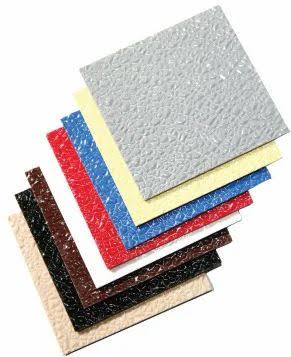
General FRP panels — from partitions to enclosures — need a resin that processes predictably at volume, batch after batch.
Fast, predictable cure for volume production.
What manufacturers build
Why this material suits the work
Required resin characteristics
- Predictable viscosity and gel time across varied panel sizes and thicknesses
- Even wet-out on both flat and lightly profiled panel surfaces
- Adjustable cure speed to match differing batch sizes without changing resin grade
- Adequate mechanical strength for panels used as partitions, guards and enclosure covers
- Batch consistency so panel quality doesn't vary as production shifts between different jobs
Process context
Advantages
- Fast gel time supports efficient turnaround across a mixed-panel production schedule
- Non-accelerated cure system adapts to different batch sizes without a resin change
- One documented grade covers varied panel work without keeping several resins on the shelf
- Consistent 99% purity keeps quality uniform across every panel type run through the line
Common products
- Toilet cubicle and partition panels
- Electrical enclosure and machine guard covers
- Wall cladding and false ceiling panels
- Equipment housings and general FRP sheet products
Common questions
Yes. Its predictable viscosity and gel time make it suitable across varied panel jobs — fabricators adjust laminate thickness and reinforcement layers per panel rather than switching resin grades.
Yes. FRP Polyester Pigment can be blended into GP Clear Resin before catalysing to produce coloured panels for cladding or décor applications, in addition to a clear or natural finish.
E-glass chopped strand mat is the standard reinforcement, with layer count adjusted to the mechanical demands of the specific panel — a lightweight ceiling panel needs less than a structural enclosure cover.
It is cured at room temperature with an MEKP catalyst (around 1.5%) and a cobalt octoate accelerator (around 0.4%), with dosage adjusted to the batch size and pace of a given production run.
GP Clear Resin is a standard general-purpose resin without fire-retardant additives. Where a panel needs a fire-rating specification, Samrat FRP Traders' Fire Retardant Resin is the more suitable choice.
Need resin for your FRP panel production?
Get a bulk quote or talk to our technical team about the right grade and dosage for your panel fabrication line.
Contact Samrat FRP Traders